
1
Children and Families
2025
HIGHLIGHTS & ACCOMPLISHMENTS
The Meadows Institute worked alongside schools, government agencies, hospitals, policymakers, and local communities to address children’s mental health needs and foster long-term resilience while also supporting the adults who care for them. By sharing our proven strategies with trusted partners on the ground, we helped young people and their families achieve well-being while navigating crisis, even following the tragic July 4 floods.
After the Floods: Supporting Children and Families’ Mental Health
The floods that raged through Texas Hill Country had a far-reaching impact on families across the state as well as the nation. Within hours, the Meadows Institute leaped into action to help meet the mental health needs of people affected by the catastrophe.
Our nationally respected Trauma and Grief (TAG) Center, a flagship program of The Hackett Center for Mental Health, guided parents, caregivers, educators, and mental health professionals to understand how trauma and loss uniquely affect young people. We emphasized how to talk with children about the floods, support children at home and in the classroom, recognize when a child needs further care, and promote self-care for adults.
- Supporting Families: The TAG Center made practical resources — including bilingual handouts, webinars, screening tools, and a national directory of clinicians trained in childhood trauma and grief-informed care — available to families in Texas and beyond.
- Equipping Providers on the Ground: Building on our expertise helping hundreds of young people move forward after personal losses, the TAG Center quickly stepped in to train clinicians supporting flood survivors. We provided state-of-the-art models of care, including Multidimensional Grief Therapy (MGT) and Trauma and Grief Component Therapy (TGCT). And we trained non-clinician staff at community and faith-based organizations to deliver an adapted version of MGT, expanding support to even more children and families.
- Strengthening Schools: The floods affected children from Austin to Dallas to Houston. The TAG Center helped educators learn how to support grieving and traumatized students as they returned to class in the fall. We also enhanced clinicians’ trauma and grief intervention skills in partnership with Texas Child Health Access Through Telemedicine (TCHATT), which offers free, urgent mental health services during the school day to nearly 4.5 million students.
- Offering Direct Care: In areas where children died in the floods, the Lucine Center, a TAG Center affiliate, provided no-cost counseling to children and adolescents in schools and via teletherapy.
“Most clinicians know how to deal with trauma, but very few have learned how best to help a parent who’s lost a child or a child who’s lost a sibling or best friend. With the right training and guidance, mental health professionals can conduct the very hard, essential work of responding to unimaginable trauma and grief.”
— Julie Kaplow, TAG Center executive director
The Meadows Institute predicts that an additional 6,200 adults in Kerr County will need to be treated for PTSD as a result of the Central Texas floods. An additional 2,000 children and youth will need care for severe emotional disturbance.
Meeting Urgent Needs with Urgency
In the midst of a severe mental health crisis, too many children and adolescents end up in the emergency room or in the hands of law enforcement, instead of getting appropriate care. Specialized Youth Crisis Outreach Teams (YCOTs) respond immediately, calm the situation, and connect families to long-term support.
In 2025, the Meadows Institute helped launch and train Texas’s first eight YCOTs. We also worked behind the scenes to garner more state funding to sustain this early momentum and expand YCOT statewide.
Areas marked in blue show the counties where the YCOTs are now active.
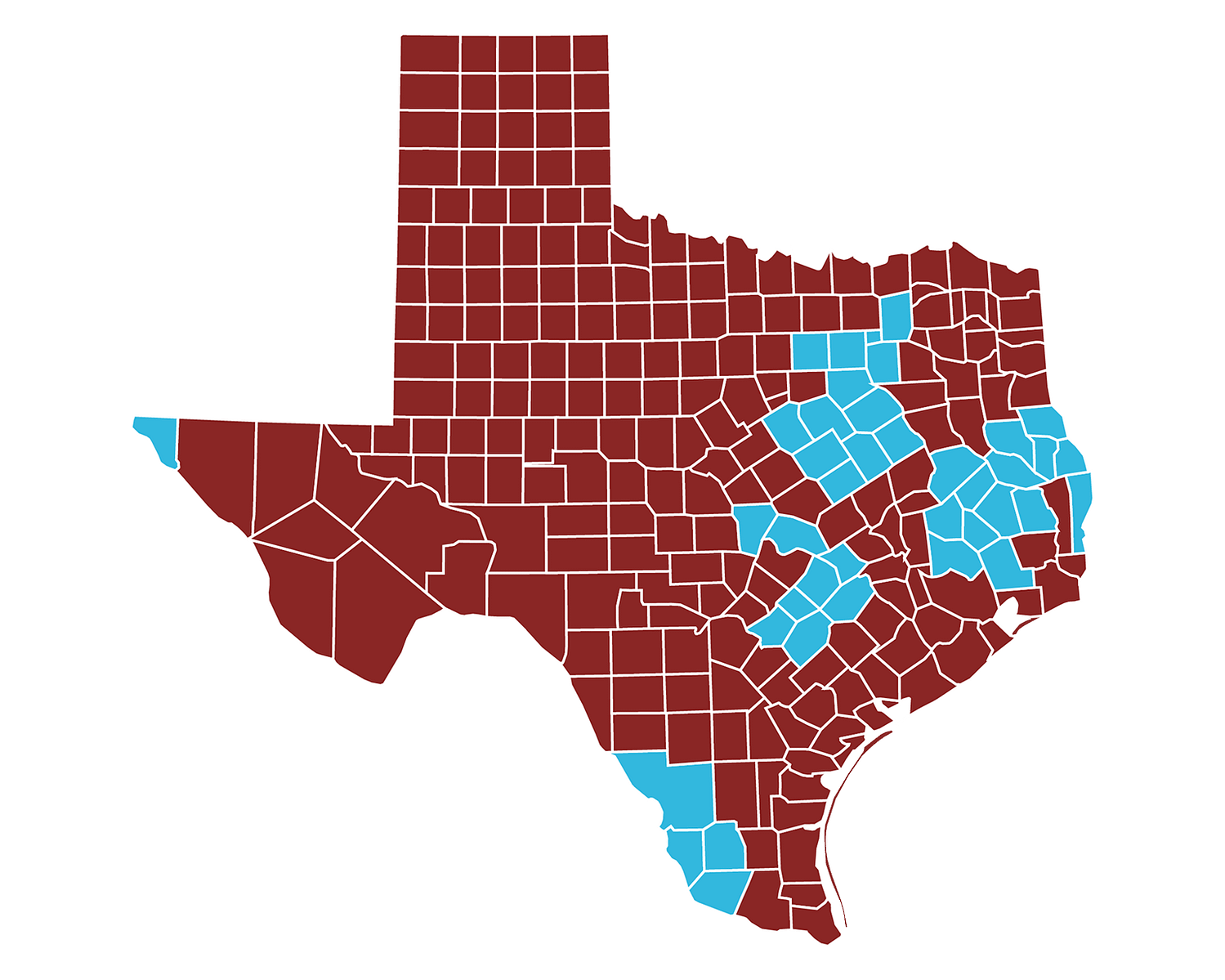
The 89th Texas Legislature increased YCOT funding by $40 million, more than doubling the number of teams available to provide timely, compassionate care to children and families in their moments of need.
In the first year, Texas’ YCOTs served
1,427
youth in crisis
preventing further violence, hospitalization, suicide, and incarceration.
“Schools are asking for help with youth mental health crises. Parents are asking for help. Emergency rooms are asking for help. YCOT is the answer to these calls.”
— Kate Volti, senior vice president for children’s specialty health care
YCOT is a game-changer for the most vulnerable children and youth, including those with developmental disabilities and in foster care. This year, we equipped hundreds of professionals to safely help these youth, whose needs are often misunderstood during a mental health crisis.
Financing the Future of School Mental Health
School-based mental health programs improve student attendance, behavior, and academics, as well as staff retention and performance — but they are only effective if sustained long-term. As pandemic-era funding wanes, the Meadows Institute collaborated with the Texas Association of School Business Officials to create a financial toolkit. The toolkit helps school district leaders identify new federal and state sources to finance mental health initiatives that support the ongoing emotional wellness of students and staff.
Turning Higher Education Leaders into Mental Health Leaders
College is often a turning point for mental health. New pressures, independence, and expectations can bring challenges to the surface or make existing ones harder to manage. Through Minding College Minds™, the Meadows Institute is helping colleges and universities build a culture of wellbeing. The initiative — supported by the Trellis Foundation, Greater Texas Foundation, Texas Pioneer Foundation, Ascendium, and ECMC Foundation — combines technical assistance, a collaborative learning community, and upfront buy-in from school decision-makers to enhance mental health support in higher education.
Already, participating schools have developed new mental health training programs, increased awareness of mental health services on campus, improved data collection, and formed clearer crisis protocols. Next, we will help campuses implement the Minding College Minds framework to boost mental health support for students, faculty, and staff nationwide.

One out of every 12 U.S. college students is enrolled in a Texas institution of higher education.
“Minding College Minds has shifted our approach from viewing mental health support as a standalone service to recognizing it as a shared institutional responsibility.”
— Jason Morrison, Ed.D., president, Trinity Valley Community College
To date, 25 colleges and universities serving more than 584,000 Texas students have committed to enhancing mental health through Minding College Minds.